




How Conductive Type C FIBC Bags Improve Safety in Explosive Environments
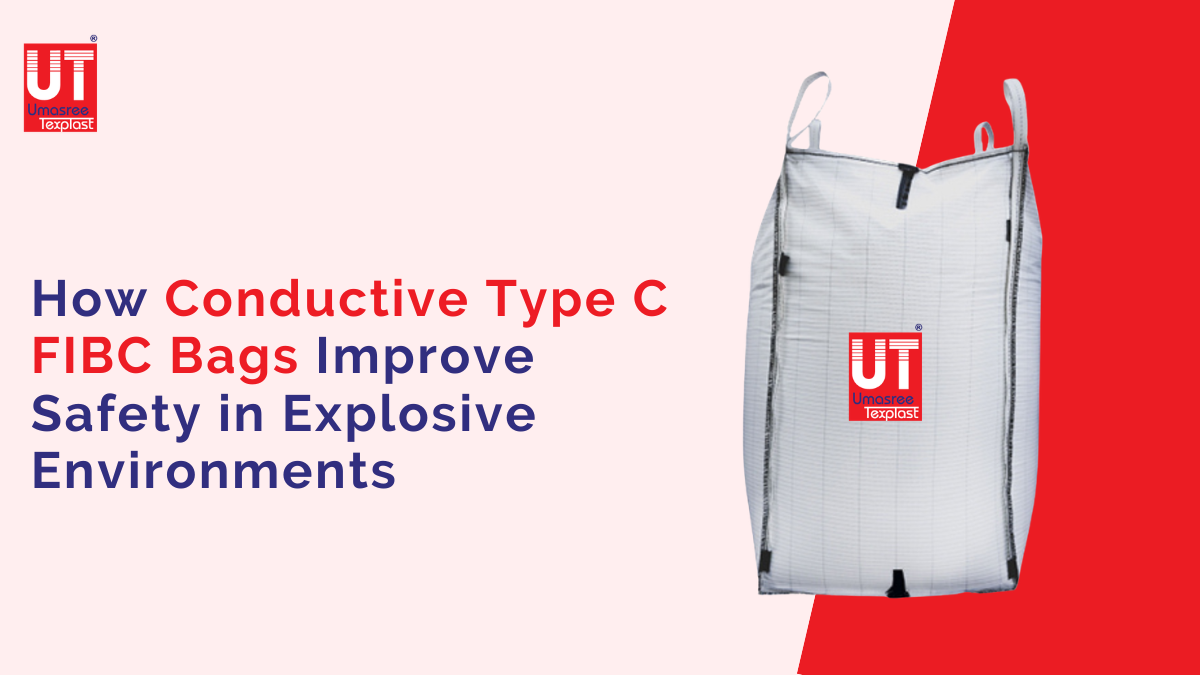
In industries that handle combustible powders, fine chemicals, pharmaceuticals, food ingredients, or flammable materials, safety is not just a priority, it is a critical operational requirement. A single electrostatic discharge can ignite an explosive atmosphere, leading to equipment damage, production downtime, financial losses, and serious risks to personnel.
This is where Conductive Type C FIBC Bags play a vital role. Designed specifically for hazardous environments, these specialized bulk bags safely dissipate static electricity during filling, transportation, storage, and discharge, significantly reducing the possibility of ignition caused by electrostatic discharge.
At Umasree Texplast, we manufacture high-quality Conductive Type C FIBC Bags that comply with international quality standards and deliver dependable performance for industries operating in potentially explosive environments. Our solutions combine safety, durability, and customization to meet diverse industrial requirements worldwide.
Understanding Conductive Type C FIBC Bags
Flexible Intermediate Bulk Containers (FIBCs), commonly known as Jumbo Bags or Bulk Bags, are widely used for transporting and storing dry bulk materials. While conventional FIBC bags offer excellent strength and cost efficiency, they can generate static electricity during product handling.
Conductive Type C FIBC Bags, also known as groundable FIBCs, are specially engineered to eliminate this risk.
These bags are manufactured using woven polypropylene fabric integrated with conductive threads. During filling and emptying operations, these conductive threads channel electrostatic charges safely to the ground when the bag is properly connected to an approved grounding system.
This controlled dissipation of static electricity helps prevent dangerous sparks that could ignite flammable gases, vapors, dust clouds, or combustible powders.
Why Static Electricity Creates Serious Risks?
Static electricity naturally develops whenever materials move against each other.
Common examples include:
- Filling powdered chemicals
- Pneumatic conveying
- Gravity filling
- Emptying fine powders
- Handling plastic pellets
- Transporting dry granular materials
When these materials move inside a standard bulk bag, friction generates electrical charges.
If those charges accumulate without a safe discharge path, they can suddenly release as an electrostatic spark.
In hazardous locations containing:
- Flammable gases
- Solvent vapors
- Combustible dust
- Fine chemical particles
Even a small spark can trigger an explosion.
Industries cannot afford this risk.
How Conductive Type C FIBC Bags Work?
The design of Conductive Type C FIBC Bags focuses on safely controlling electrostatic discharge.
The process involves:
1. Conductive Fabric Construction
The woven polypropylene fabric contains conductive yarns arranged in a specific grid pattern throughout the bag.
These conductive threads collect electrostatic charges generated during product handling.
2. Electrical Continuity
Every conductive thread connects throughout the bag structure, creating a continuous conductive network.
This ensures electrical charges travel efficiently instead of accumulating.
3. Proper Grounding
Before filling or emptying begins, operators attach the grounding point on the bag to a verified earth connection.
The accumulated electrical charges safely flow into the ground.
4. Spark Prevention
Since static electricity continuously dissipates, the possibility of hazardous electrostatic discharge is significantly reduced.
The result is safer material handling in explosive environments.
Industries That Benefit from Conductive Type C FIBC Bags
Many industries operate in environments where combustible dust or flammable vapors exist.
Conductive Type C FIBC Bags provide an effective packaging solution for:
Chemical Industry
Chemical powders frequently generate static electricity during handling.
These bags help reduce ignition risks while improving operator safety.
Pharmaceutical Manufacturing
Pharmaceutical ingredients often require contamination-free handling alongside electrostatic protection.
Groundable FIBCs support both safety and product integrity.
Food Processing
Materials such as flour, starch, sugar, cocoa powder, milk powder, and spice powders can produce combustible dust clouds.
Using conductive bulk bags helps minimize electrostatic hazards during transportation.
Petrochemical Industry
Many petrochemical products release flammable vapors during production and packaging.
Type C bags help lower ignition risks in these environments.
Mining and Minerals
Fine mineral powders and metal dusts can become explosive under certain conditions.
Conductive packaging improves workplace safety throughout handling operations.
Plastic and Polymer Industry
Plastic resins and polymer granules often generate static charges during movement.
Properly grounded conductive bags prevent charge accumulation.
Key Benefits of Conductive Type C FIBC Bags
Enhanced Workplace Safety
The primary advantage is improved protection against electrostatic ignition.
By safely dissipating static charges, these bags help create safer working environments.
Reduced Explosion Risks
Industries handling combustible materials can significantly reduce the probability of spark-induced explosions.
Compliance with International Safety Standards
Quality Conductive Type C FIBC Bags are designed to meet recognized international safety requirements for hazardous material handling.
Strong and Durable Construction
These bags maintain the high strength expected from industrial bulk packaging while adding electrostatic protection.
Custom Manufacturing Options
Manufacturers can customize bags according to:
- Size
- Capacity
- Filling systems
- Discharge options
- Coating
- Liners
- Printing
- Lifting loops
Cost-Effective Risk Management
Investing in safe packaging helps reduce:
- Workplace incidents
- Equipment damage
- Production downtime
- Insurance-related losses
- Operational disruptions
Best Practices for Safe Use
Even the best Conductive Type C FIBC Bags require proper handling.
Follow these recommendations:
- Always connect the grounding tab before filling or emptying.
- Verify grounding continuity before every operation.
- Train operators on proper grounding procedures.
- Inspect bags regularly for damage.
- Replace damaged or worn bags immediately.
- Never use Type C bags without grounding.
- Store bags in clean and dry conditions.
- Follow all workplace safety regulations.
Correct usage is essential for achieving maximum protection.
Choosing the Right Manufacturer Matters
Safety begins with manufacturing quality.
Poorly manufactured conductive bags may not provide consistent electrical continuity, reducing their effectiveness.
When selecting a supplier, consider:
- Manufacturing experience
- Quality certifications
- Testing procedures
- Customization capabilities
- Export expertise
- Consistent product quality
- Technical support
A reliable manufacturer ensures every bag performs as intended under demanding industrial conditions.
Why Choose Umasree Texplast?
Umasree Texplast has built a strong reputation as a trusted manufacturer of industrial bulk packaging solutions for customers across global markets.
We combine advanced manufacturing technology with rigorous quality control to produce reliable Conductive Type C FIBC Bags that meet the safety expectations of industries handling hazardous materials.
Our capabilities include:
- High-quality manufacturing infrastructure
- Custom-designed FIBC solutions
- Strict quality assurance processes
- Export-ready production standards
- Industry-specific packaging expertise
- Reliable delivery schedules
- Dedicated customer support
Whether your application involves chemicals, food ingredients, polymers, minerals, pharmaceuticals, or other sensitive materials, our team works closely with you to provide packaging solutions tailored to your operational requirements.
Conclusion
Electrostatic discharge remains one of the most significant hazards in facilities that handle combustible powders and flammable materials. Selecting the right packaging solution can greatly improve operational safety while protecting personnel, equipment, and valuable products.
Conductive Type C FIBC Bags provide a dependable way to control static electricity, making them an essential choice for industries operating in explosive environments. When combined with proper grounding procedures and safe handling practices, they help reduce ignition risks and support safer, more efficient bulk material handling.
At Umasree Texplast, we are committed to delivering high-performance conductive FIBC solutions that meet the demanding safety and quality expectations of industries worldwide. If you are looking for reliable, customizable bulk packaging designed for hazardous applications, our team is ready to help you find the right solution.