




How PP Woven Fabric Manufacturers Deliver Consistent Width, GSM, and Weaving Quality
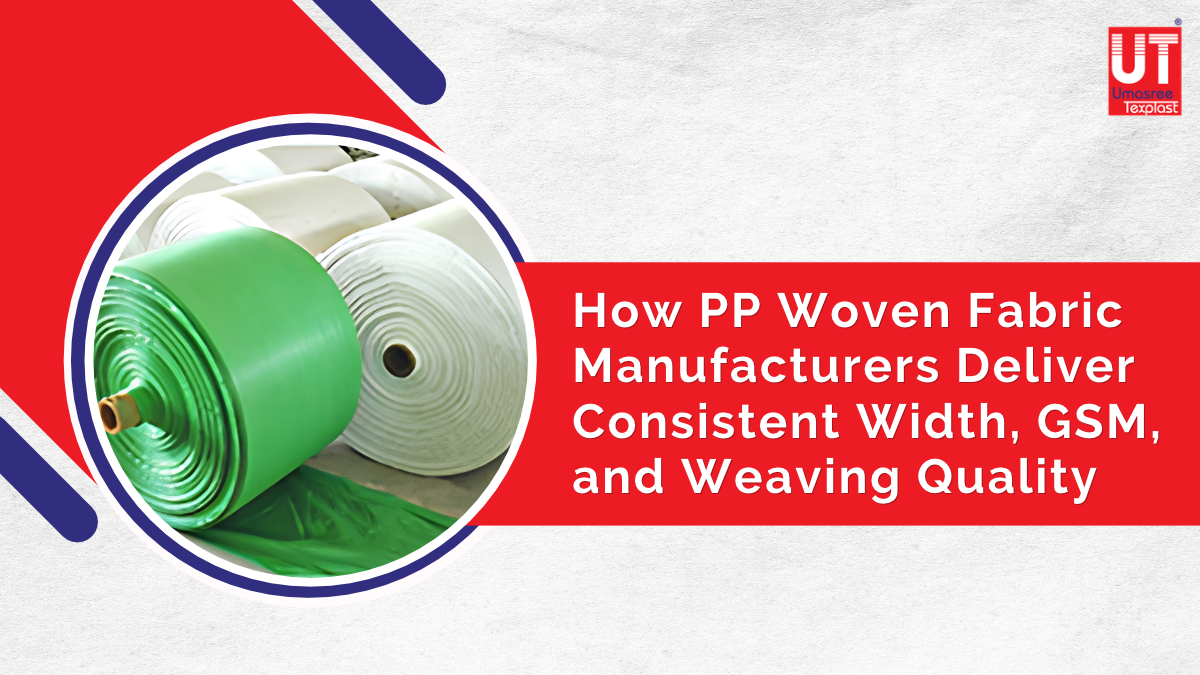
PP woven fabric plays an important role in industrial packaging, agriculture, construction, and bulk material handling. Manufacturers use it to produce woven sacks, FIBC bags, bale wrap fabrics, ground covers, and other packaging products. However, the quality of these products depends on more than the raw material itself. Consistent fabric width, GSM, and weaving quality also determine how well the material performs during cutting, stitching, lamination, and final use.
For businesses sourcing PP woven fabric in bulk, even small variations can create production challenges. Inconsistent width may increase material waste, variations in GSM can affect fabric weight, and irregular weaving can reduce structural consistency.
Reliable PP Woven Fabric Manufacturers follow controlled production processes and quality checks to maintain the agreed specifications across production batches. At Umasree Texplast, we understand the importance of dependable woven fabric for industrial packaging applications. Understanding how manufacturers control these parameters helps buyers make informed purchasing decisions.
Why Quality Consistency Matters in PP Woven Fabric
Polypropylene (PP) woven fabric consists of polypropylene tapes interlaced in two directions: warp and weft. Manufacturers produce these tapes from polypropylene material and weave them into fabric according to the required specifications.
The final fabric must meet the buyer’s requirements for width, GSM, weave density, strength, and finish. When manufacturers maintain these specifications, converters can plan their production more efficiently and reduce unexpected material variations.
Consistent fabric quality offers several benefits:
- Better production efficiency: Uniform fabric dimensions simplify cutting, stitching, and conversion.
- Predictable material consumption: Consistent GSM helps buyers estimate material usage more accurately.
- Reliable product performance: Uniform weaving supports the required fabric structure and mechanical properties.
- Reduced material waste: Fewer defects and dimensional variations help minimize rejected material.
- Improved batch consistency: Buyers receive fabric that meets the agreed specifications across multiple production runs.
These benefits make quality control an essential part of the manufacturing process, especially for businesses purchasing large quantities of PP woven fabric.
1. How Manufacturers Maintain PP Woven Fabric Width Consistency
Fabric width is one of the first specifications buyers should confirm when sourcing PP woven material. The correct width helps manufacturers and converters use the fabric efficiently for their intended products.
For example, a packaging manufacturer may need a particular fabric width to produce sacks or FIBC components. If the actual width varies significantly from the approved specification, the production team may need to adjust cutting patterns or manage additional material waste.
Accurate Loom Setup
Manufacturers begin by setting up the weaving loom according to the required fabric width. The loom configuration, warp arrangement, and fabric handling system influence the finished dimensions.
Operators must follow the approved production specifications and monitor the fabric during weaving. Proper setup helps reduce variations and supports repeatable production.
Controlled Fabric Handling
Fabric tension and handling can influence the dimensions of the finished material. Uneven tension, improper winding, or inconsistent handling may contribute to dimensional variations.
Manufacturers can reduce these risks by maintaining suitable operating conditions and checking the fabric at defined stages of production.
Regular Width Measurement
Quality teams should measure the fabric width at suitable intervals and compare the results with the approved specification. They should also check whether the usable width meets the buyer’s requirements.
The inspection process should account for the measurement method, fabric condition, and any agreed tolerances. Manufacturers should document deviations and correct recurring issues before they affect a larger production quantity.
This systematic approach to PP woven fabric width consistency helps buyers receive material that fits their converting and packaging requirements.
2. How Manufacturers Control PP Woven Fabric GSM
GSM stands for grams per square metre. It measures the mass of one square metre of fabric and helps buyers understand its weight per unit area.
The required GSM depends on the application, fabric construction, and performance specifications. Manufacturers must balance material weight with the strength, flexibility, and other properties required for the finished product.
Control of Polypropylene Tape Quality
The quality and linear density of polypropylene tapes influence the weight and construction of the finished fabric. Manufacturers must produce tapes that meet the specified requirements before weaving begins.
Variations in tape dimensions or linear density can affect the final fabric weight and uniformity. Consistent raw material preparation and extrusion control therefore support better GSM consistency.
Consistent Weaving Parameters
Weaving density also affects GSM. The number of warp tapes and weft insertions within a given area influences how much material the fabric contains.
Manufacturers must maintain the specified weave density and monitor production conditions. Significant changes in tape properties or weaving settings can cause the finished fabric weight to vary.
Accurate GSM Testing
A practical PP woven fabric GSM inspection involves cutting a sample of a known area and weighing it using a suitable calibrated weighing instrument.
For example, if a fabric sample measures 100 square centimetres, the measured mass can be converted to grams per square metre by multiplying the sample weight in grams by 100.
Manufacturers should take representative samples, follow a consistent testing method, and compare the results against the agreed GSM specification and tolerance.
Where lamination or coating forms part of the product, the manufacturer and buyer should clarify whether the GSM requirement applies to the uncoated fabric or the finished laminated material.
Regular testing helps identify variations early and supports consistent material planning across production batches.
3. How Manufacturers Ensure Consistent PP Woven Fabric Weaving Quality
Width and GSM alone cannot determine whether a woven fabric will perform as expected. The weaving structure also matters.
A fabric may meet its target weight and width but still contain irregularities that affect its appearance, strength, or suitability for conversion. Manufacturers must therefore inspect the weave itself.
Uniform Warp and Weft Arrangement
The warp tapes run along the length of the fabric, while the weft tapes run across its width. Their arrangement creates the woven structure.
Manufacturers must maintain the required weave pattern and density. Irregular tape spacing, missing weft insertions, or damaged tapes can create visible defects and affect fabric consistency.
Monitoring Loom Performance
Loom condition and operating settings influence the quality of the finished fabric. Worn components, incorrect settings, and inconsistent tape feeding may contribute to weaving defects.
Routine equipment checks and timely maintenance help manufacturers maintain stable production conditions. Operators should also identify recurring defects and investigate their causes instead of relying only on final inspection.
Inspecting Fabric Surfaces
Visual inspection helps identify holes, broken tapes, uneven weaving, contamination, and other visible defects. The inspection criteria should reflect the intended application and the buyer’s quality requirements.
Manufacturers can combine visual checks with appropriate physical testing to evaluate whether the fabric meets its specifications.
Effective PP woven fabric weaving quality management helps maintain a uniform structure and reduces the risk of defects reaching the conversion stage.
4. The Role of Quality Control Throughout Manufacturing
Quality control works best when manufacturers apply it throughout production rather than checking only the finished roll.
A structured quality process can include the following stages.
Stage 1: Raw Material Inspection
Manufacturers assess incoming polypropylene material against their purchasing and production requirements. Suitable raw materials provide a consistent starting point for tape extrusion and weaving.
Stage 2: Tape Production Checks
During extrusion, manufacturers monitor relevant tape properties, including dimensions and linear density, according to the product specification. These checks help identify variations before the tapes enter the weaving process.
Stage 3: In-Process Weaving Inspection
Operators and quality teams monitor fabric width, weave uniformity, visible defects, and other specified parameters during production. Early checks help them correct problems before they affect large quantities.
Stage 4: Finished Fabric Testing
Quality teams inspect representative samples and verify the agreed specifications. Depending on the application, testing may include GSM, width, tensile strength, and other relevant properties.
Stage 5: Roll Inspection and Packing
Before dispatch, manufacturers check roll condition, identification, packaging, and traceability requirements. Proper handling helps protect the fabric during storage and transportation.
This approach to PP woven fabric quality control connects raw material checks, production monitoring, finished-product testing, and dispatch inspection. It also gives manufacturers a clearer record of whether each batch meets the agreed requirements.
5. Other Quality Parameters Buyers Should Consider
Although width, GSM, and weaving quality are essential, buyers should evaluate other parameters based on the intended application.
| Quality parameter | Why it matters |
| Tape denier or linear density | Helps define the tape’s mass per unit length and supports consistent fabric construction. |
| Tensile strength | Indicates how the fabric resists pulling forces in specified test directions. |
| Elongation | Measures how much the fabric stretches under a defined load. |
| Weave density | Helps verify the arrangement of warp and weft tapes. |
| Roll length | Supports production planning and material consumption estimates. |
| Lamination quality | Matters when the application requires a coating or laminated surface. |
| Surface appearance | Helps identify visible defects, contamination, and irregularities. |
| UV resistance | Matters when the fabric must withstand outdoor exposure and the application requires UV protection. |
Not every application needs the same specifications. For example, fabric used for a standard woven sack may have different requirements from fabric used in an FIBC bag or an outdoor ground cover.
Buyers should define the required properties before production and agree on suitable testing methods and acceptance limits with the manufacturer.
6. How to Choose Reliable PP Woven Fabric Manufacturers
Selecting a manufacturer involves more than comparing prices. Buyers should evaluate the supplier’s ability to meet technical requirements consistently and deliver the agreed quantity on schedule.
Consider these factors before placing a bulk order:
1. Manufacturing capabilities
Check whether the manufacturer produces the type of PP woven fabric your application requires and can accommodate your specified dimensions and construction.
2. Quality control procedures
Ask how the manufacturer checks width, GSM, weave density, and relevant mechanical properties. Find out how frequently inspections take place and how the manufacturer handles deviations.
3. Product customization
Confirm whether the manufacturer can produce the required width, GSM, colour, roll length, and finish according to your specifications.
4. Testing and documentation
Ask for relevant test reports, product specifications, and quality records. For critical applications, agree on sampling procedures and acceptance criteria before approving bulk production.
5. Production and delivery capability
Evaluate whether the supplier can meet your order quantity, production schedule, packaging requirements, and delivery expectations.
6. Industry experience and certifications
Review the manufacturer’s experience, relevant quality certifications, and suitability for your intended application. Verify that any certification or compliance claim applies to the specific product and requirement.
A reliable manufacturer should communicate clearly about technical specifications, inspection procedures, and product limitations. This helps buyers establish realistic expectations and reduce avoidable production problems.
Conclusion
Consistent width, GSM, and weaving quality help businesses obtain PP woven fabric that meets their production and packaging requirements. Manufacturers achieve this consistency through appropriate raw material controls, stable weaving conditions, regular measurements, and systematic quality inspections.
For buyers, the best approach is to define the required specifications clearly and evaluate suppliers on their ability to meet those requirements across production batches.
Umasree Texplast offers PP woven fabric and related industrial packaging solutions for a range of applications. Contact the team to discuss your fabric requirements and identify a suitable solution for your business.