




How to Choose the Right Waste Management Dumpster Bag for Construction vs Industrial Use
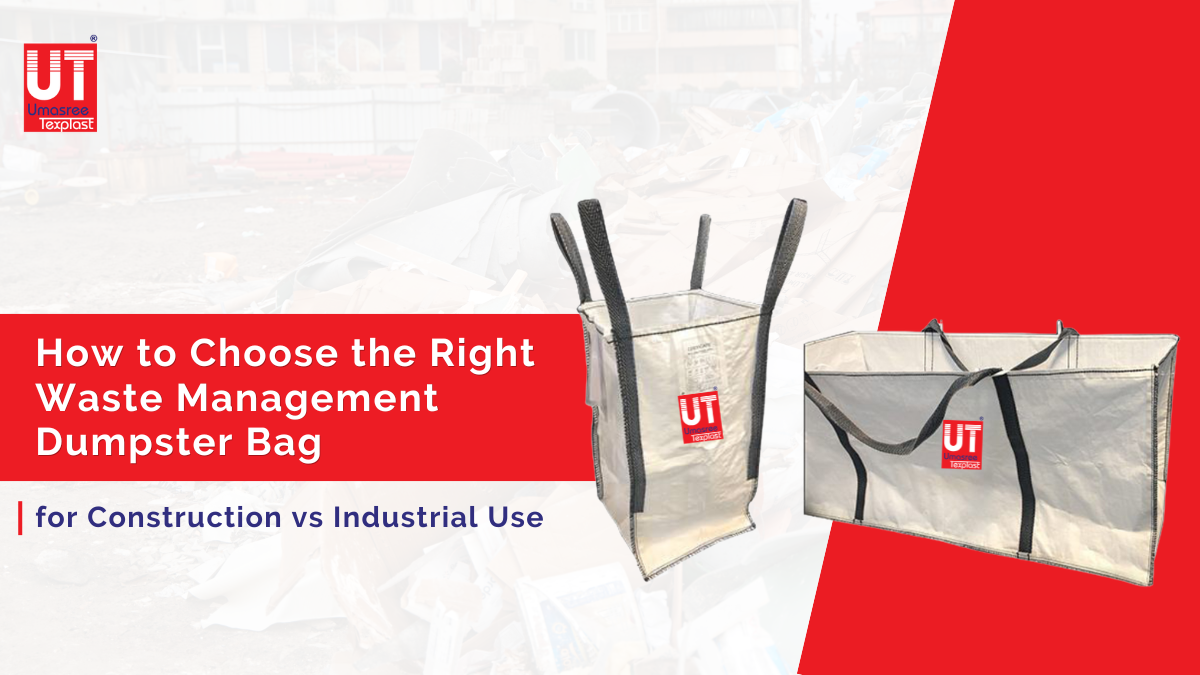
Handling waste efficiently is not just about disposal. It directly impacts safety, productivity, and compliance. Whether you manage a construction site or operate an industrial facility, choosing the right waste management dumpster bag can make a measurable difference in daily operations.
Many buyers treat all bulk waste bags the same. That approach often leads to overloading issues, tearing, contamination risks, or unnecessary costs. The requirements of a construction site are very different from those of an industrial environment, and your selection should reflect that.
This guide breaks down how to choose the right option based on your use case, materials, and operational demands.
Understanding the Role of Dumpster Bags
Dumpster bags are flexible bulk containers designed to collect, store, and transport waste materials safely. Unlike rigid containers, they are lightweight, space-efficient, and easy to deploy across different locations.
They are commonly used for:
- Construction debris
- Renovation waste
- Scrap materials
- General industrial waste
- Facility cleanouts
A well-chosen bag improves handling efficiency and reduces the risk of spillage or accidents.
Construction vs Industrial Waste: Why the Difference Matters?
Before selecting a dumpster solution, it is important to understand how waste differs across these two environments.
Construction Waste Characteristics
Construction sites generate:
- Heavy debris like concrete, bricks, and sand
- Sharp materials such as metal scraps and glass
- Irregular waste loads
- Outdoor exposure to weather
This type of waste demands high durability and load-bearing strength.
Industrial Waste Characteristics
Industrial environments typically produce:
- Process waste and packaging residues
- Uniform or semi-uniform materials
- Controlled indoor waste streams
- Higher volume but more predictable loads
Here, consistency, handling efficiency, and sometimes hygiene standards become more important than extreme ruggedness.
Key Factors to Consider When Choosing the Right Dumpster Bag
1. Load Capacity and Safety Factor
The first factor to evaluate is how much weight the bag needs to handle.
Construction sites often require:
- Higher Safe Working Load
- Strong safety ratios to prevent failure during lifting
Industrial use may involve:
- Moderate loads but frequent handling cycles
Always match the bag capacity to your average and peak waste load. Overloading leads to safety risks and increased replacement costs.
2. Material Strength and Fabric Quality
The fabric determines how well the bag performs under stress.
For construction:
- Choose heavy-duty woven polypropylene fabric
- Look for reinforced stitching
- Ensure resistance to tearing and punctures
For industrial use:
- Standard woven fabric may be sufficient
- Focus on consistency and durability over repeated use
A high-quality build ensures longer life and fewer operational disruptions.
3. Size and Dimensions
Selecting the right size improves both efficiency and cost control.
Construction sites benefit from:
- Larger bags for bulky debris
- Flexible dimensions to handle irregular waste
Industrial facilities often prefer:
- Standardized sizes for easier stacking and storage
- Medium to large capacities depending on workflow
Avoid choosing oversized bags if your waste volume is low. It leads to inefficient handling and storage issues.
4. Lifting and Handling Design
Handling efficiency plays a major role in productivity.
Look for:
- Strong lifting loops
- Easy forklift or crane compatibility
- Stable structure during lifting
Construction environments may require:
- Heavy-duty loop designs for rough handling
Industrial settings benefit from:
- Consistent loop positioning for automation or repeated movement
If your operations involve frequent lifting, this feature becomes critical.
5. Open or Closed Design
The top and bottom design affects usability.
For construction:
- Open-top designs allow quick dumping of debris
- Flat bottom supports stable loading
For industrial use:
- Controlled openings may help manage specific waste types
- Cleaner handling can be achieved with structured designs
Choose based on how waste is loaded and unloaded in your facility.
6. Environmental Considerations
Sustainability is no longer optional. Many businesses now prioritize eco-friendly waste handling solutions.
Modern dumpster bags can:
- Be reusable across multiple cycles
- Be made from recyclable materials
- Reduce overall waste footprint
Using reusable bulk bags also lowers long-term costs compared to single-use alternatives.
7. Customization Based on Application
No two operations are identical. Customization allows you to align the bag with your exact needs.
You may require:
- Specific dimensions
- Higher load capacity
- Branding or labeling
- Reinforced areas for stress points
Experienced manufacturers like Umasree Texplast provide tailored solutions based on application requirements, ensuring better performance in real-world conditions.
Choosing the Right Option for Construction Use
If your primary focus is construction or renovation projects, prioritize:
- High load capacity for heavy debris
- Tear-resistant fabric
- Reinforced lifting loops
- Larger size options
- Weather resistance
Construction environments are unpredictable. Your waste bag must handle rough usage without compromising safety.
Choosing the Right Option for Industrial Use
For industrial facilities, focus on:
- Consistent sizing for operational efficiency
- Moderate to high durability based on waste type
- Easy handling and transport
- Reusability for cost savings
- Clean and structured design
Efficiency and repeatability matter more than extreme ruggedness in most industrial setups.
Common Mistakes to Avoid
1. Ignoring Load Limits
Overloading is one of the most common mistakes. It leads to damage, safety risks, and higher costs.
2. Choosing Based on Price Alone
Low-cost options often compromise on quality. This results in frequent replacements and operational inefficiencies.
3. Not Considering Application Type
Using the same bag for construction and industrial waste without evaluation can reduce performance.
4. Overlooking Handling Requirements
If lifting and transport are not considered, it can slow down operations significantly.
Why Quality Matters More Than Ever?
Waste management is directly tied to safety, compliance, and efficiency. A poorly chosen dumpster bag can lead to:
- Workplace accidents
- Material spillage
- Increased operational costs
- Delays in waste handling
Investing in the right solution improves workflow and ensures long-term reliability.
Final Thoughts
Choosing the right waste management dumpster bag is not just a procurement decision. It is a strategic choice that affects safety, cost, and efficiency across your operations.
Construction sites require strength and durability to handle unpredictable loads. Industrial environments demand consistency and efficient handling for smoother workflows.
Understanding these differences helps you make informed decisions and avoid costly mistakes.
If you are evaluating options, focus on load capacity, material strength, size, and handling design. A well-matched solution will support your operations and deliver better performance over time.
For businesses looking for reliable and customizable bulk packaging solutions, manufacturers like Umasree Texplast bring decades of expertise in delivering high-quality products tailored to diverse industry needs.