




How FIBC Bag Design Affects Supply Chain Efficiency and Packaging Costs
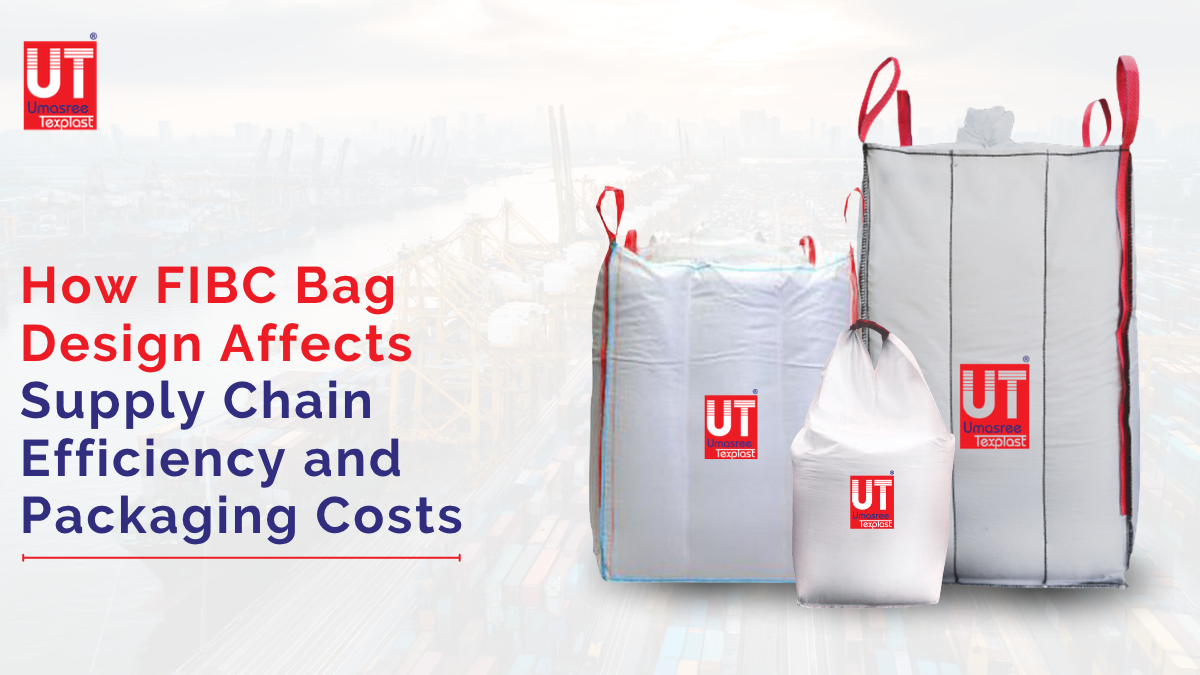
Moving bulk materials efficiently requires more than reliable transportation. Businesses also need packaging that protects their products, supports safe handling, uses storage space effectively, and fits their supply chain operations. For industries handling powders, granules, agricultural products, minerals, and chemicals, Flexible Intermediate Bulk Containers (FIBCs) offer a practical way to manage large quantities of material.
However, not all FIBC bags deliver the same results. Their dimensions, fabric construction, lifting loops, filling and discharge systems, and overall design can influence handling time, storage capacity, product loss, and transportation expenses.
Choosing the right FIBC bag design helps businesses improve operational efficiency while managing packaging costs. At Umasree Texplast, we understand the importance of selecting bulk packaging that meets the specific needs of each application. This guide explains how thoughtful bag design can improve supply chain performance and help businesses make better packaging decisions.
Why FIBC Bag Design Matters in Supply Chain Management
FIBC bags, also known as bulk bags or jumbo bags, are widely used to store and transport dry bulk materials. Their flexible construction and large capacity make them suitable for industries such as agriculture, food processing, construction, chemicals, fertilizers, and mining.
While bag capacity is important, businesses should also consider how each bag performs throughout the supply chain. A design that works well for one application may create challenges in another.
For example, a bag that retains its shape after filling can help a warehouse team stack and arrange inventory more efficiently. A suitable discharge spout can reduce unloading time, while correctly designed lifting loops can support compatible material-handling equipment.
The right design can help businesses:
- Improve filling, lifting, and unloading operations.
- Make better use of warehouse and transport space.
- Reduce product spillage and avoidable material loss.
- Simplify handling and inventory management.
- Select packaging that matches the product’s storage and transportation requirements.
- Control total packaging and handling expenses.
These advantages show why businesses should evaluate FIBC packaging based on its overall performance rather than the purchase price alone.
1. How Bag Shape and Dimensions Improve Storage Efficiency
The shape and dimensions of an FIBC bag directly influence how it occupies space after filling. Businesses should select dimensions that match their product volume, storage arrangements, and transportation requirements.
Choosing the Right Bag Construction
Different FIBC designs serve different purposes. Common options include U-panel bags, circular bags, and baffle bags.
U-panel FIBC bags: These bags use a U-shaped body panel combined with side panels. Manufacturers can customize their dimensions and lifting arrangements to suit different bulk packaging applications.
Circular FIBC bags: These bags use tubular fabric to form the body. Depending on their construction and intended application, they can offer a suitable option for handling specific bulk materials.
Baffle FIBC bags: These bags contain internal fabric panels sewn across the corners. The baffles help the filled bag retain a squarer shape, which can improve stacking and space utilization when the bag and storage system are compatible.
Why Dimensions Matter
A bag that is too large for the intended product may leave unused space, while an unsuitable shape can make stacking more difficult. Incorrect dimensions can also complicate loading plans and warehouse organization.
Businesses should consider the material’s bulk density, required filling volume, pallet dimensions, available storage height, and transport equipment before finalizing the bag size.
Selecting the right dimensions helps businesses use available space more effectively and reduce avoidable handling adjustments.
2. How Filling and Discharge Features Reduce Handling Time
Filling and unloading often account for a significant part of bulk material handling. The design of an FIBC bag can make these operations easier or more complicated, depending on the equipment and product requirements.
Filling Spouts and Open Tops
A filling spout can help operators connect the bag to compatible filling equipment and direct material into the container. Its diameter, length, and closure arrangement should match the product and filling system.
Open-top designs may suit applications where operators load material from above. However, the right choice depends on the filling method, material characteristics, and the level of protection required.
Discharge Spouts and Bottom Construction
Discharge spouts can help operators control material flow during unloading. A suitable spout and closure arrangement may reduce manual intervention and make it easier to direct material into hoppers, conveyors, or processing equipment.
Some applications may require a flat bottom or a different discharge arrangement. The choice depends on whether the operation requires complete discharge, controlled flow, or compatibility with existing equipment.
The Impact on Productivity
When bag openings and discharge features match the handling system, businesses can reduce unnecessary adjustments and improve workflow consistency.
For example, a manufacturer that transfers powders into a production line may benefit from a discharge arrangement designed for its receiving equipment. A business handling coarse agricultural materials may need a different configuration.
The goal is to select features that support the actual process, rather than adding unnecessary components that increase the bag’s cost.
3. How Lifting Loops and Load Capacity Affect Operational Efficiency
FIBC bags must support the intended load and remain compatible with the equipment used to lift and move them. Lifting loops, fabric strength, seams, and overall construction all contribute to safe handling.
Selecting Suitable Lifting Arrangements
FIBC bags can use different lifting configurations, including one-loop, two-loop, and four-loop designs. The appropriate arrangement depends on the bag construction, lifting equipment, and handling procedure.
A four-loop bag may suit operations that use compatible forklifts or lifting frames. Single-loop and double-loop bags may suit other material-handling arrangements.
Businesses should confirm that the selected lifting design works with their equipment and operating conditions before placing an order.
Understanding Safe Working Load
Safe Working Load (SWL) specifies the maximum load a bag is designed to carry under its defined conditions. Buyers should confirm the required SWL and safety factor with the manufacturer.
A bag’s load capacity depends on its construction, fabric, seams, lifting loops, and other design elements. Businesses should never assume that every jumbo bag can safely handle the same weight.
Using a bag designed for the intended load helps businesses maintain safe handling practices and avoid disruptions caused by unsuitable packaging.
4. How FIBC Bag Design Helps Reduce Product Loss
Product loss can increase packaging expenses and affect the efficiency of the entire supply chain. Spillage, contamination, moisture exposure, and unsuitable discharge arrangements can all create avoidable costs.
The right bag design helps address these risks according to the material being handled.
Fabric and Liner Selection
The fabric and liner requirements depend on the product’s particle size, moisture sensitivity, handling conditions, and cleanliness requirements.
For example, fine powders may require additional measures to control leakage, while moisture-sensitive products may need a suitable liner or other protective features.
Manufacturers and buyers should evaluate fabric construction, seams, liner compatibility, and closure arrangements together rather than treating each component separately.
Matching the Design to the Product
Different industries have different packaging needs. Agricultural products may require ventilation in suitable applications, while certain powders and fine materials may require designs that help control leakage.
Chemical packaging may require additional attention to material compatibility, static electricity, and applicable transport regulations.
Selecting appropriate FIBC packaging solutions helps businesses address product-specific risks and avoid paying for features that do not support their actual requirements.
5. How the Right Design Helps Control Bulk Packaging Costs
The purchase price of a bag represents only one part of its overall cost. Businesses should also consider filling and unloading time, storage requirements, transport efficiency, product loss, and waste handling.
A low-cost bag may not provide the best value if its design causes frequent handling problems or product loss.
Reduce Unnecessary Packaging Features
Not every application needs the same construction or accessories. Additional liners, coatings, specialized fabric, and complex closures may increase the purchase price.
Businesses should identify which features the product genuinely requires. For example, a liner may be necessary for moisture protection or product containment in one application but unnecessary in another.
A clear specification helps the manufacturer recommend a suitable design without adding avoidable costs.
Improve Space Utilization
Bag dimensions and shape can affect how efficiently businesses arrange filled bags in storage areas and transport vehicles.
Baffle bags can help maintain a squarer shape, potentially improving space utilization when the product, stacking arrangement, and equipment support that configuration.
However, actual savings depend on the material, bag dimensions, filling consistency, stacking method, and vehicle limitations. Businesses should evaluate the proposed design under their operating conditions instead of assuming that every bag will produce the same result.
Consider the Total Cost of Ownership
A more useful comparison evaluates the complete cost of using the packaging.
Businesses should consider:
- Purchase price per bag.
- Filling and unloading labour.
- Storage and handling requirements.
- Transport space and load restrictions.
- Product loss and rejected material.
- Disposal or recovery requirements.
- Testing and compliance requirements.
This broader assessment helps procurement teams compare packaging options based on their operational value rather than price alone.
6. How Umasree Texplast Supports Industrial Packaging Requirements
Umasree Texplast provides FIBC bags and other industrial packaging products for businesses handling materials across sectors such as agriculture, food grains, fertilizers, cement, minerals, and chemicals.
The company offers different FIBC constructions, including baffle bags and one-loop and two-loop designs, along with customized packaging options. These choices allow buyers to discuss their specific requirements rather than relying on a single bag configuration for every application.
When selecting FIBC packaging, businesses should share information about the product, required capacity, filling and discharge methods, storage arrangements, and transportation conditions. This information helps the manufacturer assess the required design and identify suitable features.
Umasree Texplast also highlights its manufacturing capabilities, quality management systems, and international supply experience. Buyers can discuss their application requirements with the team to determine an appropriate packaging configuration.
To explore available options, visit the Umasree Texplast website and contact the team about your FIBC bag requirements.
Conclusion
FIBC bag design influences much more than the way a product is packed. It can affect storage efficiency, handling time, transportation planning, product protection, and overall packaging expenses.
By selecting suitable dimensions, bag construction, lifting arrangements, and filling and discharge features, businesses can improve material movement and manage costs more effectively.
Umasree Texplast helps businesses explore FIBC bags and customized industrial packaging options for different applications. Contact the team to discuss your requirements and identify a bag design that supports your operational and supply chain goals.