




How to Properly Ground Type C FIBC Bags: A Practical Guide to Safe Handling
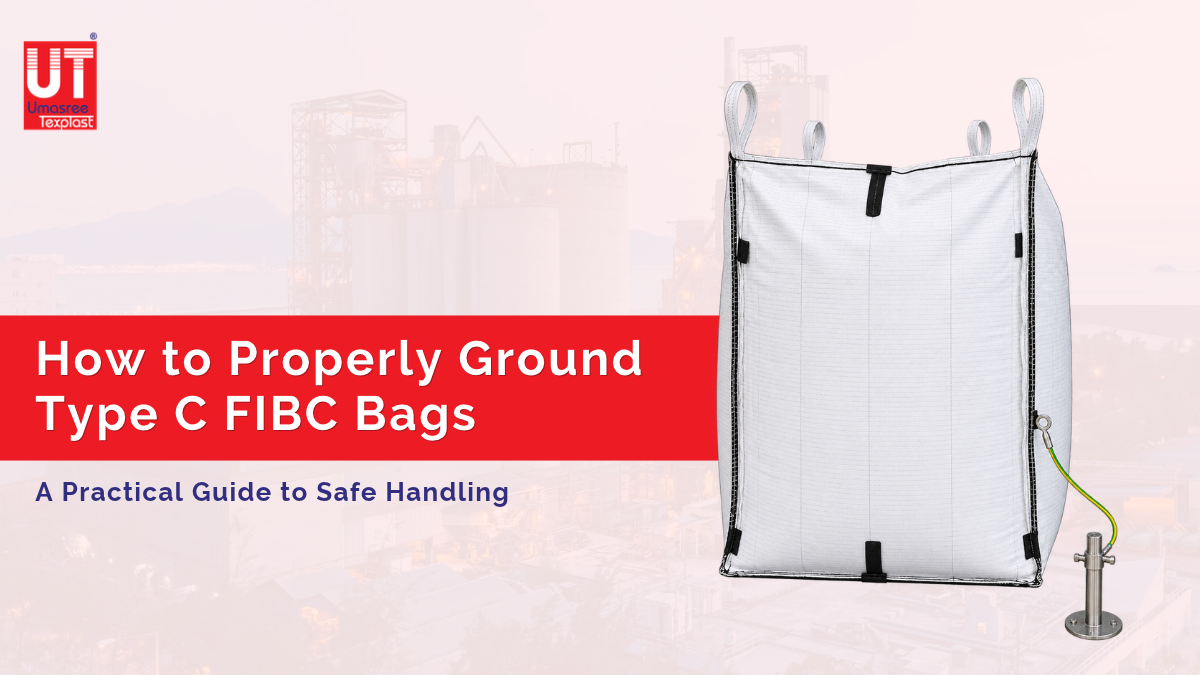
When handling powders, granules, chemicals, or other dry bulk materials, static electricity can become a serious safety concern. Friction generated during filling, handling, and discharge can create an electrostatic charge inside an FIBC. If that charge does not have a controlled path to ground, it may result in an electrostatic discharge.
This is why Type C FIBC Bags, also known as conductive or groundable FIBC bags, are designed with conductive threads that allow accumulated static charge to be safely dissipated through a grounding connection. However, simply choosing a Type C bag is not enough. Proper grounding must be maintained throughout the relevant handling operation.
So, how should Type C FIBC Bags be grounded and handled correctly? This practical guide explains the process, common mistakes, and important safety considerations.
What are Type C FIBC Bags?
Type C FIBC Bags are flexible intermediate bulk containers manufactured using woven polypropylene fabric with interconnected conductive threads. These threads are commonly arranged in a grid-like structure throughout the bag and provide a path for static electricity to flow toward an approved grounding point.
Unlike conventional FIBCs that do not provide static protection, Type C bags are specifically designed to be connected to ground during filling and discharge operations. Umasree’s conductive bags use conductive yarns and grounding tabs designed for consistent earthing during the handling of sensitive materials.
Type C FIBC Bags can be particularly relevant in operations where combustible powders, flammable materials, or potentially explosive atmospheres create electrostatic hazards. Their effectiveness, however, depends on maintaining a suitable and continuous grounding connection.
Why Is Grounding Important for Type C FIBC Bags?
Static electricity can build up when dry materials move against other surfaces. Filling a bulk bag, transferring powder through conveying equipment, or discharging its contents can all contribute to electrostatic charge generation.
If the charge accumulates on the FIBC without a controlled discharge path, it can potentially produce a spark. In an environment containing flammable vapours, gases, or combustible dust, an ignition source can create a serious safety event.
The conductive construction of Type C FIBC Bags provides a route for static charge to move away from the bag when the conductive network is properly connected to ground.
The key point is simple:
A Type C FIBC must be properly grounded to perform its intended electrostatic-control function.
Umasree’s product information specifically states that conductive Type C bags must be consistently grounded during filling and discharge to help prevent ignition risks associated with electrostatic discharge.
How to Properly Ground Type C FIBC Bags
Grounding procedures should always follow the FIBC manufacturer’s instructions, the site’s electrical safety procedures, and applicable regulations. The following process provides a practical overview.
1. Inspect the FIBC Before Use
Before connecting the bag, inspect it carefully.
Check the:
- Conductive fabric and yarns
- Grounding tab or grounding point
- Seams and lifting loops
- Filling and discharge components
- Liner, if applicable
- General condition of the bag
Look for visible damage, contamination, broken conductive connections, or other conditions that could affect the bag’s intended performance.
A damaged Type C FIBC should not simply be placed into service because it appears structurally strong. Its electrostatic-control properties also need to remain suitable for the intended operation.
2. Identify the Designated Grounding Point
Type C FIBC Bags are designed with a grounding point, such as a grounding tab or grounding connection.
Locate this point before beginning the filling or discharge process. Do not improvise a grounding connection by attaching a cable to an unsuitable part of the bag.
Umasree highlights grounding tabs as an important feature of its Conductive Type C Bulk Bags for consistent earthing and safe handling.
3. Connect the Bag to an Approved Ground
The grounding connection should be attached to an appropriate, verified grounding point using suitable grounding equipment.
The objective is to establish a reliable electrical path between the conductive network of the FIBC and ground.
The connection should be secure before the material-handling operation begins. If your facility has a prescribed grounding verification procedure, follow it before filling or discharging the bag.
4. Verify the Grounding Connection
Do not assume that attaching the grounding cable automatically means the bag is safely grounded.
The connection should be checked according to your site’s established procedure and the requirements applicable to the operation. Where appropriate, suitable grounding verification equipment can be used to confirm continuity.
This step is especially important because a loose, damaged, contaminated, or disconnected connection can compromise the intended electrostatic-control system.
5. Begin Filling Only After Grounding Is Established
Once the grounding connection has been established and verified according to the applicable procedure, the filling operation can begin.
During filling, pay attention to the grounding connection. Avoid pulling, disconnecting, or damaging the grounding cable as the bag expands or moves.
The grounding connection should remain effective throughout the operation rather than being treated as a one-time setup step.
6. Maintain Grounding During Discharge
Grounding is equally important when emptying a Type C FIBC.
As the material moves out of the bag, additional electrostatic charge may be generated. Therefore, the grounding connection should remain in place throughout the discharge operation.
Do not disconnect the grounding connection prematurely simply because the filling process has finished.
The same basic principle applies:
Establish the ground before the operation and maintain the connection for the duration of the relevant handling process.
Common Grounding Mistakes to Avoid
Even when a facility uses Type C FIBC Bags, incorrect handling can reduce the effectiveness of the electrostatic-control system.
Using a Type C Bag Without Grounding
This is one of the most important mistakes to avoid. Type C FIBC Bags depend on grounding to provide their intended electrostatic protection. Umasree’s FIBC classification information also identifies the interconnection of conductive yarns and connection to ground as critical to the safe use of Type C FIBCs.
Connecting to an Unverified Grounding Point
A grounding cable should not simply be attached to any nearby metal object. The facility should use an approved and verified grounding point as part of its established safety procedure.
Ignoring Damaged Conductive Components
A bag can look perfectly usable while having damage that affects its conductive network or grounding components. Inspect Type C FIBC Bags before use and follow the manufacturer’s criteria for determining whether a bag remains suitable.
Disconnecting Grounding Too Early
Removing the grounding connection before the handling process is complete can leave the bag without its intended path for electrostatic charge dissipation.
Treating Every FIBC Type the Same
Type A, Type B, Type C, and Type D FIBCs have different electrostatic properties and operating requirements. Type C FIBC Bags are specifically designed to be grounded, so their handling procedures should not be confused with those for other FIBC classifications.
Where Are Type C FIBC Bags Commonly Used?
Type C FIBC Bags are useful for applications where controlling electrostatic charge is an important part of safe bulk-material handling.
Common applications can include industries handling:
- Chemicals
- Fine powders
- Pigments and dyes
- Certain food powders
- Plastics and resins
- Agricultural materials
- Combustible or electrostatic-sensitive products
The exact suitability of a Type C FIBC depends on the material, process, equipment, surrounding environment, and applicable safety requirements. A bag should therefore be selected based on the complete handling application rather than the product name alone.
Type C FIBC Bags vs. Type D FIBC Bags
Type C and Type D FIBCs are both associated with electrostatic-control applications, but they work differently.
Type C FIBC Bags use conductive elements and require a grounding connection during use. Their conductive network provides a controlled path for electrostatic charge to reach ground.
Type D FIBCs, by contrast, are designed using static-dissipative fabric and do not rely on the same grounding connection. Umasree’s FIBC classification information distinguishes Type C as groundable conductive FIBCs and Type D as static-protective FIBCs designed to dissipate charge without a ground connection.
Choosing between the two should depend on the operating environment, material characteristics, handling process, and applicable safety requirements.
Choosing the Right Type C FIBC Bags
Selecting the right Type C FIBC involves more than choosing a bag based on size or load capacity.
Consider factors such as:
- Type of material being handled
- Static-charge generation during filling and discharge
- Required safe working load
- Filling method
- Discharge method
- Grounding arrangement
- Liner requirements
- Bag construction
- Closure requirements
- Applicable industry and safety requirements
Customization may also be important for specialized applications. Umasree offers conductive Type C bulk bags with options including different lifting arrangements, filling and closure configurations, and discharge options such as discharge spouts, iris protection, and petal closures.
Safe Grounding Is Part of the Complete FIBC Handling Process
Using Type C FIBC Bags is only one part of an effective static-control strategy. The bag, grounding equipment, filling system, discharge equipment, operating procedures, and surrounding environment all need to be considered together.
Operators should be properly trained and should follow the manufacturer’s handling instructions and the safety procedures established for their facility. Where hazardous materials or potentially explosive atmospheres are involved, the applicable regulatory and engineering requirements should also be followed.
A well-designed grounding procedure can help make Type C FIBC handling more controlled and predictable while reducing the risks associated with uncontrolled electrostatic discharge.
Choose Reliable Type C FIBC Bags for Safer Bulk Handling
For operations where static control is critical, choosing a properly designed and manufactured Type C FIBC Bag is an important part of safe bulk packaging. Umasree manufactures Conductive Type C Bulk Bags using conductive yarns and grounding features, with customization available for different filling, lifting, closure, and discharge requirements. If you are looking for Type C FIBC Bags for your specific material-handling application, explore Umasree’s Conductive Bags or contact the Umasree team to discuss your requirements and select a suitable configuration.