



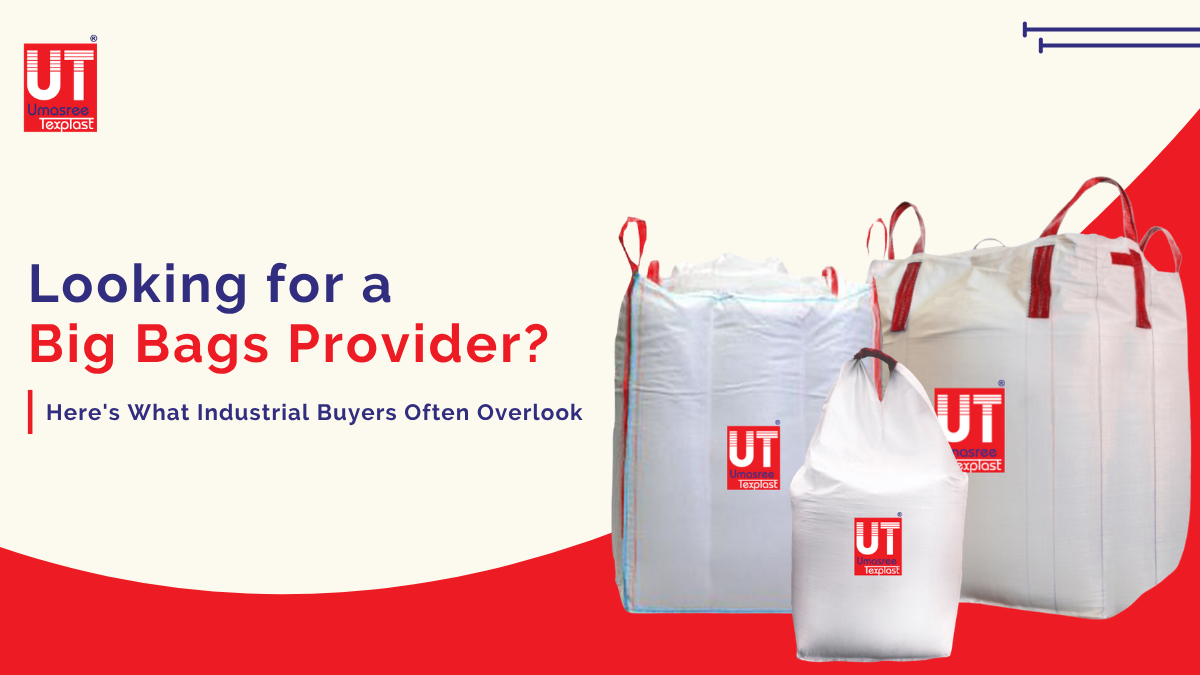
Looking for a Big Bags Provider? Here’s What Industrial Buyers Often Overlook
Selecting the right packaging partner is about much more than comparing prices. Industrial buyers know that a bulk packaging decision affects product safety, operational efficiency, logistics costs, and customer satisfaction. Yet many procurement teams focus only on quotations and delivery timelines while overlooking factors that influence long-term performance.
Whether you purchase packaging for construction materials, agricultural products, minerals, chemicals, polymers, or food ingredients, choosing the right supplier can reduce handling issues, improve storage efficiency, and support uninterrupted production.
This guide explains the key factors buyers often overlook when evaluating a Big Bags Provider and how making informed decisions can help businesses avoid unnecessary costs.
Why Choosing the Right Supplier Matters
Big bags have become one of the most reliable solutions for transporting and storing dry bulk materials. However, not every manufacturer follows the same production standards or quality control practices.
A dependable supplier does more than manufacture bags. They understand your application, recommend suitable bag designs, maintain consistent quality, and deliver products that perform throughout transportation and storage.
For businesses that ship products domestically and internationally, selecting an experienced partner minimizes packaging failures, delays, and product loss.
1. Looking Beyond Price
Price naturally plays an important role during procurement, but the lowest quotation rarely delivers the best value.
Low-cost bags may use inconsistent raw materials, poor stitching quality, or inadequate testing procedures. These issues can lead to damaged goods, handling challenges, and unexpected replacement costs.
Instead of comparing only prices, evaluate the total value offered, including:
- Product quality
- Manufacturing standards
- Technical expertise
- Delivery reliability
- Customer support
- Long-term consistency
A slightly higher investment in quality packaging often reduces operational expenses over time.
2. Manufacturing Capabilities Matter More Than You Think
Many buyers search online for Big Bag Manufacturers but don’t investigate their actual production capabilities.
Modern manufacturing facilities should include:
- Advanced extrusion and weaving equipment
- Automated cutting and stitching
- Quality inspection laboratories
- Multiple quality checkpoints
- Controlled production processes
Manufacturing capability directly impacts product consistency, dimensional accuracy, and load performance.
Companies with integrated production facilities generally maintain better control over quality compared to businesses that outsource significant portions of manufacturing.
3. Industry Experience Should Influence Your Decision
Every industry has different packaging requirements.
For example:
- Construction materials require durable handling performance.
- Agricultural products often need proper ventilation.
- Minerals demand high-strength packaging.
- Food products require clean manufacturing environments.
An experienced supplier understands these differences and recommends suitable solutions instead of offering a one-size-fits-all product.
With decades of manufacturing expertise, companies like Umasree Texplast understand the operational challenges faced by multiple industries and develop packaging solutions accordingly.
4. Certifications Reflect a Commitment to Quality
Many buyers overlook certifications after receiving product samples.
However, certifications demonstrate that a manufacturer follows established quality management systems and standardized production practices.
Look for internationally recognized certifications relevant to manufacturing and quality management.
These standards indicate that processes are regularly monitored, documented, and continuously improved.
This becomes particularly valuable for businesses exporting products to global markets where quality expectations remain consistently high.
5. Customization Can Improve Operational Efficiency
No two businesses handle bulk materials in exactly the same way.
Factors such as filling systems, discharge methods, lifting equipment, storage conditions, and transportation requirements all influence the ideal bag design.
Instead of selecting standard products by default, discuss your operational requirements with the supplier.
The right packaging partner can recommend suitable options based on:
- Capacity requirements
- Filling type
- Discharge design
- Lifting configuration
- Fabric construction
- Safety requirements
Choosing the correct design improves productivity while reducing handling complications.
Internal Linking Opportunity: Link naturally to your FIBC Bags category page when discussing different bag designs.
6. Quality Control Should Never Be an Afterthought
One overlooked factor is the manufacturer’s inspection process.
Reliable manufacturers inspect products throughout production instead of checking only finished bags.
A robust quality assurance process typically includes:
- Raw material inspection
- Fabric testing
- Stitching verification
- Dimensional checks
- Load performance evaluation
- Final product inspection
Consistent quality control reduces variations between production batches and helps maintain reliable packaging performance.
7. Production Capacity Supports Business Growth
Many buyers evaluate their current requirements but overlook future demand.
A supplier with limited production capacity may struggle during seasonal demand or business expansion.
Before finalizing a partnership, consider whether the manufacturer can support:
- Larger order volumes
- Repeat orders
- Multiple product variations
- Faster production schedules
- Long-term supply commitments
Scalable production capacity provides flexibility as your business grows.
8. Export Experience Makes a Significant Difference
If your products reach international markets, your packaging supplier should understand export requirements.
An experienced Big Bags Exporter In India knows the importance of consistent manufacturing standards, documentation, quality assurance, and timely deliveries.
Global buyers often expect suppliers to maintain strict quality processes while meeting demanding shipping schedules.
Choosing an export-oriented manufacturer reduces supply chain risks and helps maintain customer confidence.
9. Technical Support Adds Long-Term Value
The relationship shouldn’t end after the purchase order.
An experienced supplier provides technical guidance before, during, and after production.
This support may include:
- Product recommendations
- Material selection
- Design improvements
- Packaging optimization
- Application guidance
Technical expertise helps businesses choose packaging solutions that align with their operational requirements instead of relying solely on standard specifications.
10. Sustainability Is Becoming a Procurement Priority
Industrial buyers increasingly evaluate environmental responsibility alongside product quality.
Manufacturers investing in resource-efficient production, responsible manufacturing practices, and sustainable packaging innovations are better positioned to support evolving customer expectations.
Businesses that adopt sustainable procurement strategies also strengthen their own environmental commitments.
11. Strong Communication Builds Better Partnerships
Even high-quality products can create challenges if communication is inconsistent.
Choose a supplier that provides:
- Prompt responses
- Clear order updates
- Transparent timelines
- Technical consultation
- Reliable after-sales support
Strong communication reduces misunderstandings and creates a smoother procurement experience.
Questions Every Industrial Buyer Should Ask
Before selecting a packaging partner, ask these questions:
- How is product quality maintained throughout manufacturing?
- What testing procedures are followed?
- Can the supplier recommend the most suitable bag design?
- Is production scalable for future demand?
- What industries does the company regularly serve?
- What certifications support its manufacturing processes?
- How does it ensure consistent product quality across batches?
The answers reveal far more than a price quotation.
Choosing a Long-Term Packaging Partner
Successful procurement is based on reliability, consistency, and performance—not simply finding the lowest-cost option.
Industrial buyers benefit from working with manufacturers that combine production expertise, strong quality systems, technical knowledge, and dependable customer support.
As a Big Bags Manufacturer In India, Umasree Texplast has built its reputation by serving diverse industries with quality-focused manufacturing, modern production capabilities, and decades of experience. Rather than focusing solely on supplying products, the company works with customers to understand their packaging requirements and recommend suitable bulk packaging solutions for long-term operational success.
Conclusion
Finding the right supplier requires more than comparing product catalogs or quotations. Manufacturing expertise, quality control, certifications, production capacity, technical support, and long-term reliability all influence the overall value a supplier brings to your business.
By evaluating these factors carefully, industrial buyers can reduce operational risks, improve supply chain efficiency, and make packaging decisions that continue delivering value for years to come.
If you’re evaluating potential suppliers, take the time to look beyond pricing. A dependable packaging partner contributes to smoother operations, better product protection, and greater confidence across every shipment.