




How Bulk Bag Manufacturers Address Industry-Specific Packaging Challenges?
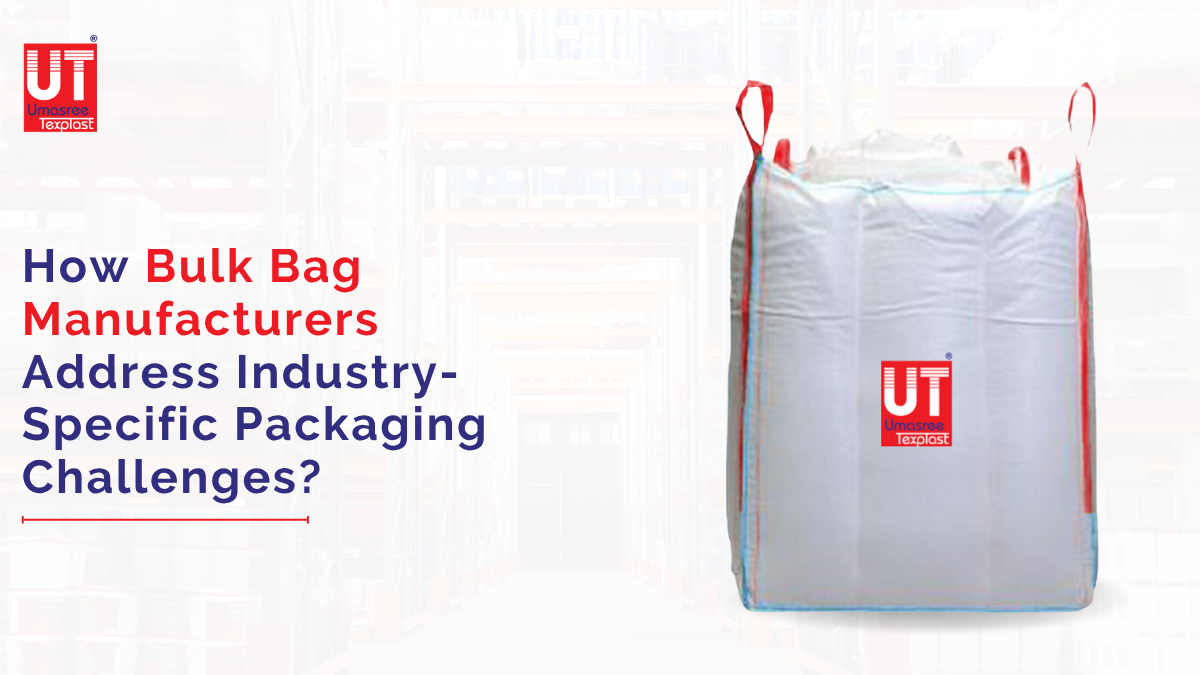
Industrial packaging is far from a one-size-fits-all solution. Every industry has its own handling methods, storage conditions, transportation requirements, and operational challenges. A packaging solution that performs exceptionally well for construction materials may not be suitable for agricultural products, while materials with fine particles require different design considerations than coarse or irregular materials.
This is where experienced Bulk Bag Manufacturer companies stand apart. Rather than producing standard bags for every application, they evaluate the customer’s industry, product characteristics, and supply chain requirements before recommending the right packaging solution.
For procurement teams and industrial buyers, understanding how manufacturers solve these industry-specific challenges can lead to better purchasing decisions, lower operational costs, and improved product protection.
Why Industry-Specific Packaging Matters
Bulk bags play a critical role throughout the supply chain. They simplify material handling, improve storage efficiency, and make transportation more economical. However, their performance depends on selecting the right design for the intended application.
Several factors influence packaging requirements, including:
- Product density
- Moisture exposure
- Loading and unloading methods
- Storage duration
- Transportation distance
- Warehouse handling
- Stacking requirements
Ignoring these factors can lead to damaged goods, inefficient storage, higher handling costs, and unnecessary product loss.
Experienced manufacturers focus on solving these challenges before production begins.
Construction Materials Require Maximum Strength
Construction materials such as cement, sand, fly ash, and aggregates place enormous stress on packaging.
These products are often transported multiple times before reaching their destination. During this process, bags must withstand lifting equipment, rough handling, stacking, and varying weather conditions.
Manufacturers address these demands by using:
- High-strength woven polypropylene fabric
- Reinforced lifting loops
- Heavy-duty stitching
- Consistent fabric construction
- Strict quality inspections
A well-designed bulk bag reduces handling risks while ensuring materials reach the job site safely.
Agricultural Products Need Proper Ventilation
Agricultural products present a completely different challenge.
Many crops and agricultural materials require proper airflow during storage and transportation. Without adequate ventilation, excess moisture can affect product quality.
Manufacturers solve this challenge by designing bags that promote air circulation while maintaining durability.
They also consider:
- Seasonal storage
- Outdoor transportation
- Warehouse conditions
- Product sensitivity
The result is packaging that protects products without compromising airflow where required.
Different Materials Need Different Bag Designs
Industrial buyers often assume that all bulk bags perform similarly. In reality, the design varies significantly depending on the application.
Manufacturers evaluate factors such as:
- Particle size
- Product flow characteristics
- Filling speed
- Discharge requirements
- Material weight
Based on these details, they recommend suitable bag configurations that improve handling efficiency and reduce operational challenges.
Instead of adapting operations to fit the packaging, the packaging is designed to support the operation.
Storage Efficiency Is Just as Important as Transportation
Warehouse space is valuable.
Businesses constantly look for ways to improve storage capacity without increasing warehouse costs.
Modern bulk packaging helps companies:
- Stack products more safely
- Maximize storage space
- Improve inventory organization
- Simplify forklift handling
- Reduce warehouse congestion
Selecting the right bag design contributes directly to better warehouse productivity and smoother logistics.
Businesses looking for specialized packaging solutions can compare different FIBC Bags based on their storage and handling requirements.
Manufacturing Quality Determines Long-Term Performance
The performance of a bulk bag starts long before it reaches the customer.
Reliable manufacturers maintain strict quality control throughout every production stage.
This typically includes:
- Raw material inspection
- Fabric testing
- Stitching verification
- Dimension checks
- Visual inspections
- Performance testing
Each inspection helps ensure consistency across production batches.
This level of quality control becomes especially valuable for businesses placing repeat orders because consistent packaging reduces operational uncertainty.
Advanced Manufacturing Improves Product Consistency
Industrial packaging has evolved considerably over the past decade.
Today’s manufacturers invest in advanced production technology to improve both efficiency and consistency.
Modern manufacturing facilities use automated equipment that enhances:
- Fabric quality
- Cutting accuracy
- Stitching precision
- Production speed
- Inspection processes
Technology minimizes production variations while helping manufacturers meet demanding delivery schedules.
Packaging Should Match Handling Equipment
An often-overlooked factor is compatibility with existing handling equipment.
Forklifts, cranes, filling systems, and discharge equipment all influence bag design.
Manufacturers work with customers to understand how products move through their facilities before recommending suitable lifting loops, filling options, and discharge configurations.
This practical approach improves operational efficiency while reducing unnecessary handling challenges.
Industry Knowledge Creates Better Packaging Solutions
Years of manufacturing experience provide valuable insights that cannot be replaced by standard product catalogs.
An experienced Bulk Bag Company understands how different industries operate.
Rather than recommending identical products to every customer, they analyze:
- Operational workflow
- Material characteristics
- Loading processes
- Transportation methods
- Customer objectives
This consultative approach leads to packaging solutions that perform reliably in real-world applications.
Production Capacity Supports Business Growth
Choosing a supplier with sufficient manufacturing capacity is just as important as choosing the right product.
As businesses grow, packaging requirements often increase.
A dependable manufacturer should be able to support:
- Larger production volumes
- Repeat orders
- Multiple product variations
- Consistent lead times
- Long-term supply commitments
Working with a scalable supplier reduces procurement risks and supports future business expansion.
Sustainability Is Becoming a Purchasing Priority
Environmental responsibility has become an important consideration for many industrial buyers.
Manufacturers continue investing in more responsible production practices through:
- Efficient manufacturing processes
- Resource optimization
- Reduced production waste
- Continuous process improvements
Businesses increasingly prefer suppliers who combine quality manufacturing with responsible operations.
Why Certifications Matter
Certifications reflect a manufacturer’s commitment to maintaining structured production and quality systems.
Although certifications alone do not guarantee product performance, they demonstrate that manufacturing processes follow recognized quality standards.
Industrial buyers should evaluate suppliers that consistently invest in quality management, process improvement, and product reliability.
These practices contribute to consistent production outcomes and greater customer confidence.
Building Long-Term Supplier Relationships
Successful procurement goes beyond finding competitive pricing.
The best supplier relationships are built on:
- Product consistency
- Reliable communication
- Technical expertise
- Timely deliveries
- Manufacturing transparency
An experienced Bulk Bag Supplier works closely with customers to understand changing operational needs and recommend solutions that continue delivering value over time.
With more than three decades of manufacturing expertise, Umasree Texplast serves industries that demand reliable bulk packaging solutions. By combining modern manufacturing capabilities, strict quality standards, and application-focused engineering, the company supports businesses looking for dependable packaging that performs consistently across diverse industrial environments.
Choosing the Right Manufacturing Partner
When evaluating Bulk Bags Suppliers, industrial buyers should look beyond product specifications.
Ask questions such as:
- Does the manufacturer understand my industry?
- How is product quality maintained?
- Can they recommend application-specific solutions?
- Do they have the production capacity for future growth?
- What industries do they regularly serve?
The answers provide a much clearer picture than comparing quotations alone.
Conclusion
Every industry presents unique packaging challenges, and successful manufacturers recognize that effective solutions require more than standard products. By understanding material characteristics, handling methods, storage conditions, and transportation requirements, manufacturers develop packaging solutions that improve efficiency throughout the supply chain.
Whether your business operates in construction, agriculture, food processing, chemicals, or minerals, selecting the right manufacturing partner can improve operational performance while reducing long-term costs.
When evaluating Bulk Bags Manufacturers In India, focus on industry expertise, manufacturing capabilities, quality systems, and long-term reliability. These factors help ensure your packaging performs consistently today while supporting your business as it continues to grow.