



What to Look for in a UN Certified Bags Manufacturer in India: Safety, Testing and Compliance Guide?
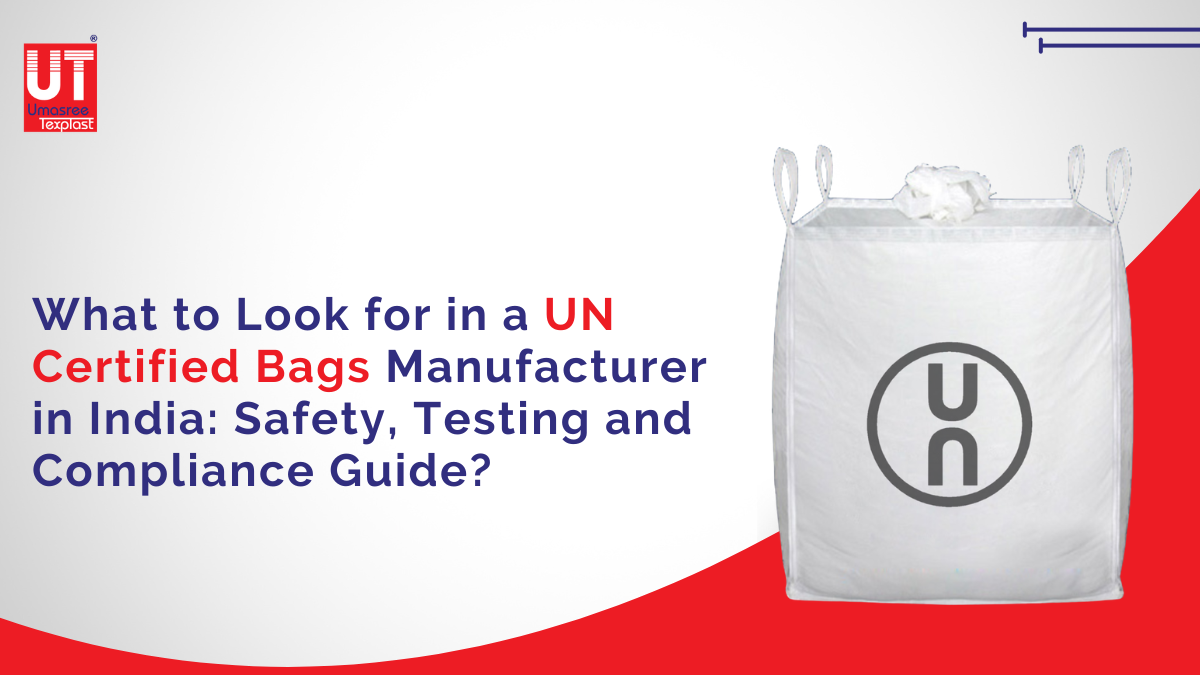
Choosing the right packaging partner is not just a procurement decision. It directly impacts product safety, export compliance, and supply chain reliability. When handling hazardous or sensitive bulk materials, businesses need packaging that performs under strict international regulations. This is where selecting a reliable un certified bags manufacturer in india becomes critical.
Many suppliers claim compliance, but only a few truly follow the rigorous standards required for global transport safety. This guide breaks down exactly what to evaluate so you can make a confident and informed decision.
Understanding UN Certified FIBC Bags and Why They Matter
UN certified FIBC bags are designed to safely store and transport hazardous or regulated bulk materials. These bags are tested under strict international guidelines defined by the United Nations recommendations for dangerous goods transport.
Unlike standard bulk packaging, these bags must pass a series of physical performance tests before they can be approved for commercial use. The goal is simple: ensure the bag does not fail during handling, stacking, transport, or environmental stress.
A reliable un certified bags manufacturer in india ensures every batch is produced under controlled conditions and tested for real world industrial performance, not just laboratory compliance.
Certifications That Define a Reliable Manufacturer
Before evaluating product quality, always assess the certifications held by the manufacturer. Certifications reflect process discipline, safety standards, and long term reliability.
Key certifications to look for include:
- ISO 9001 for quality management systems
- ISO 22000 for food safety controlled environments where applicable
- Export house recognition for global trade credibility
- Compliance with UN packaging regulations for hazardous goods
A certified company follows documented processes rather than informal production methods. For example, manufacturers like Umasree Texplast operate under structured quality systems that ensure consistency across large scale production.
Certifications alone are not enough, but they are the first filter when evaluating suppliers.
Safety Standards That Cannot Be Compromised
Safety is the foundation of UN certified packaging. Every bag must be engineered to handle stress during filling, stacking, lifting, and transportation.
A trusted un certified bags manufacturer in india focuses on these key safety aspects:
Load Handling Strength
Bags are designed for specific safe working loads depending on material type and application. Manufacturers must clearly define load limits and ensure consistency in fabric strength.
Material Integrity
High quality polypropylene fabric is essential. The weaving density, coating type, and stitching quality directly affect durability.
Structural Design
Loop strength, seam reinforcement, and base construction play a major role in preventing failure during lifting and stacking.
Safety is not just about passing tests. It is about ensuring performance in real industrial environments where conditions are unpredictable.
Testing Process That Ensures Real World Performance
Testing is one of the most important indicators of a genuine manufacturer. UN certified bags must pass multiple standardized tests before approval.
1. Top Lift Test
This evaluates whether the bag can withstand full load lifting without tearing or deformation.
2. Drop Test
The filled bag is dropped from a specified height to simulate accidental handling impacts.
3. Stacking Test
This checks whether the bags can handle pressure when stacked during storage or transport.
4. Tear Resistance Test
This measures fabric strength against accidental cuts or propagation of damage.
5. Topple and Righting Tests
These simulate instability during transport and ensure the bag maintains structural integrity.
A serious un certified bags manufacturer in india invests in certified testing facilities rather than relying on assumptions or basic inspections.
Compliance and UN Marking System
UN certified bags are classified based on the type and hazard level of materials they carry. Each bag carries a specific marking that represents its compliance level.
The classification is based on packaging groups:
- High hazard materials
- Medium hazard materials
- Low hazard materials
Each approved bag is assigned a unique identification marking after passing required tests. This marking is not decorative. It is a legal requirement for international transport compliance.
Manufacturers must ensure:
- Proper labeling as per UN guidelines
- Traceable batch production records
- Certification documentation for each product type
Without proper compliance documentation, shipments can be rejected at ports or face regulatory issues.
Manufacturing Capability and Customization Flexibility
Not all industries require the same type of packaging. A reliable supplier must offer customization based on product type, weight, and handling conditions.
Key capabilities to evaluate:
- Custom loop design options
- Fabric coating variations
- Liner compatibility based on material sensitivity
- Printing and labeling flexibility
- Size and shape customization
Advanced manufacturers also develop specialized designs for different industrial applications. Companies like Umasree Texplast focus on scalable production systems that allow customization without compromising consistency.
Customization is not a luxury. It is a necessity in industrial packaging.
Quality Control Systems That Ensure Consistency
Quality control is where many manufacturers fail. Even if raw materials are good, inconsistent stitching or poor inspection processes can lead to failure in the field.
A strong manufacturer ensures:
- Incoming raw material inspection
- In process quality checks at every production stage
- Final product inspection before dispatch
- Random sampling for stress testing
Modern facilities use controlled environments to reduce contamination and ensure uniformity in production output.
Consistency is what separates premium manufacturers from low cost suppliers.
Industry Applications That Demand UN Certified Bags
UN certified packaging is widely used across industries where safety and compliance are critical.
Common sectors include:
- Chemical and industrial material handling
- Fertilizer and agricultural input storage
- Mineral and mining product transportation
- Food grade bulk storage in controlled environments
- Polymer and resin distribution
Each industry has different risk levels and handling conditions. That is why choosing the right manufacturer becomes essential for operational safety.
How to Evaluate the Right Manufacturer Before Buying?
Before finalizing a supplier, businesses should evaluate beyond price and delivery timelines.
Here is a simple checklist:
1. Certification Verification
Always request updated certification documents and compliance reports.
2. Testing Transparency
Ask for detailed test reports and understand how products are validated.
3. Production Scale
Ensure the manufacturer can handle your volume requirements consistently.
4. Customization Capability
Check whether they can modify designs based on your operational needs.
5. Export Experience
Manufacturers with global exposure understand stricter compliance requirements.
6. Quality Assurance System
A structured QA process ensures fewer failures and better product reliability.
Evaluating these factors helps you identify a dependable un certified bags manufacturer in india rather than choosing based only on pricing.
Why Choosing the Right Partner Impacts Long Term Efficiency?
Packaging is often overlooked, but it plays a direct role in supply chain performance. Poor quality bags can lead to product loss, safety risks, and compliance failures.
A reliable manufacturing partner ensures:
- Reduced operational risk
- Improved transport efficiency
- Better compliance with global regulations
- Long term cost savings through fewer failures
When businesses choose carefully, packaging becomes a strength rather than a risk factor.
Final Thoughts
Selecting the right UN certified packaging partner is a strategic decision that affects safety, compliance, and operational stability. The focus should always be on testing standards, certification authenticity, manufacturing capability, and quality consistency.
A trusted manufacturer ensures that every bag leaving the facility is designed to perform under real world conditions, not just laboratory expectations.
Companies like Umasree Texplast demonstrate how structured manufacturing, strict testing, and global compliance awareness come together to deliver reliable packaging solutions for demanding industries.
If you are evaluating suppliers, focus on process quality first, product claims second, and pricing last. That approach will always lead to better long term results.